I never thought a kitchen mishap could lead to a culinary revelation, but that’s exactly what happened last winter. I was trying to make a quick dessert for a friend’s birthday, and my dough turned out lumpy and sticky, the way a bad haircut feels when you look in the mirror. The moment the pan hissed, I realized I was on the brink of a new flavor frontier. That sizzling sound, the aroma of vanilla and a hint of cinnamon, the sight of golden curls forming, the feel of the dough slipping through my fingers, and the first bite—sweet, crispy, with a molten chocolate kiss—told me I had stumbled onto something extraordinary.
Picture yourself in a small, sun‑lit kitchen, the air thick with anticipation. The pot on the stove boils like a tiny volcano, the steam rising in lazy ribbons that dance across the countertop. The dough, a glossy, almost translucent ribbon, slides into the piping bag as if it were liquid gold. When you press the bag, the churros emerge in perfect, elongated ribbons, their edges crisping instantly as they hit the hot oil. The kitchen fills with a scent that is at once comforting and intoxicating—warm cinnamon, sweet sugar, and a faint, buttery tang that makes your mouth water.
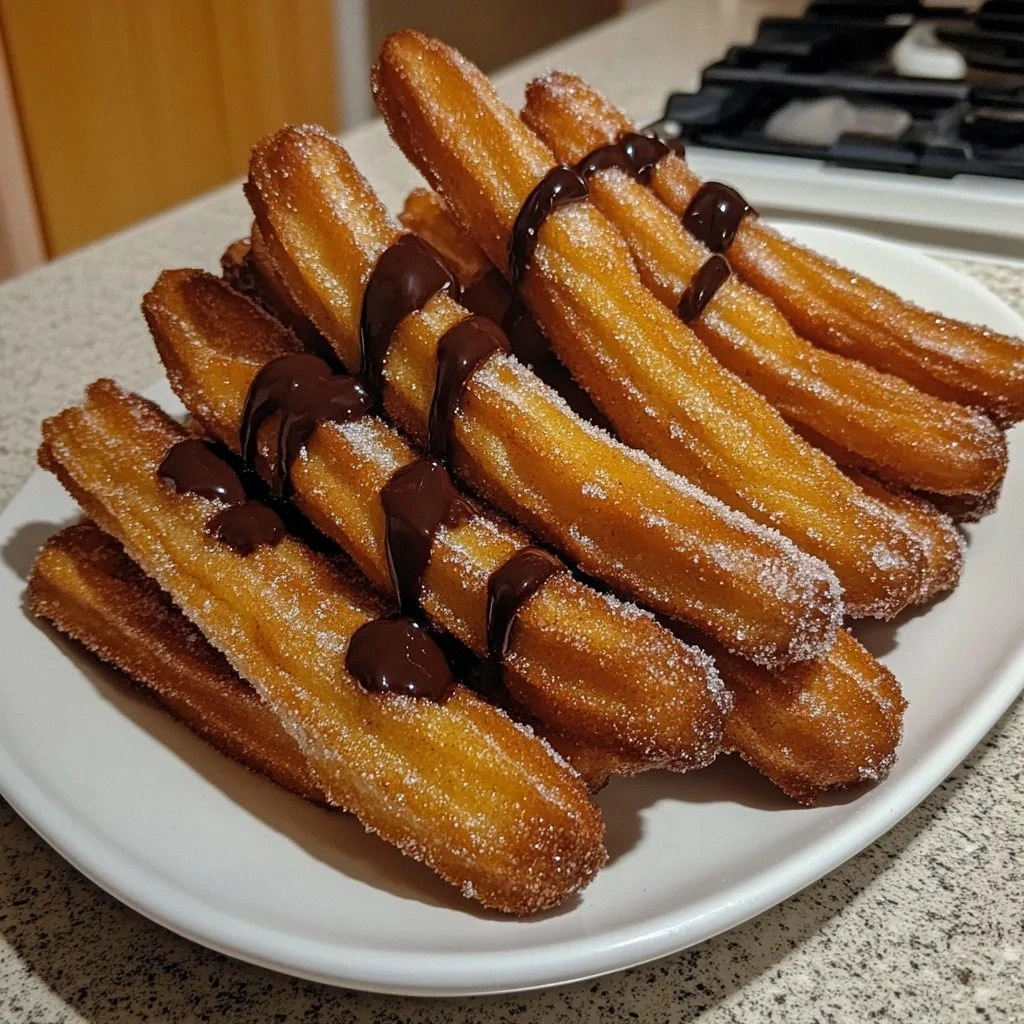
What sets this version apart isn’t just the ingredients or the technique; it’s the sheer audacity of flavor layering. The churros themselves are a delicate dance of crunchy and chewy, a texture profile that most recipes miss by over‑frying or under‑cooking. The coating—cinnamon sugar—adds a caramelized crunch that sings against the soft interior. And the chocolate sauce? It’s a velvety, slightly tart companion that melts into the churros like a decadent hug. Every bite is a revelation, a moment of pure, unapologetic indulgence that makes you question why you ever settled for store‑bought churros.
I’ll be honest—after the first batch, I ate half the churros before anyone else could even taste one. That’s the kind of confidence that comes from knowing you’ve perfected something that people will rave about. Most recipes get this completely wrong, either by making the dough too dry or by over‑frying the churros until they’re a sad, brittle mess. Here’s what actually works: a simple, foolproof dough that stays moist, a precise oil temperature that keeps the churros airy inside, and a coating that sticks like a second skin.
If you’ve ever struggled with churros, you’re not alone—there are countless videos that promise the world but deliver a soggy disappointment. I’m about to walk you through every single step, from the first whisk of flour to the final drizzle of chocolate. By the end, you’ll wonder how you ever made them any other way.
What Makes This Version Stand Out
- Texture: The churros are airy on the inside with a perfectly crisp shell, a result of the right water‑to‑flour ratio and precise oil temperature. The coating adds a delightful crunch that doesn’t overpower the dough.
- Flavor Depth: The cinnamon and sugar coating delivers a warm, spiced sweetness, while the chocolate sauce provides a rich, slightly tart counterpoint. The combination feels like a hug wrapped in a caramel‑cinnamon blanket.
- Ingredient Quality: Using high‑grade all‑purpose flour, fresh eggs, and real cinnamon gives the churros a professional finish that feels like a bakery treat.
- Ease of Preparation: The dough is simple—just a few ingredients and a quick boil—yet it’s robust enough to keep you from burning the oil or under‑cooking the churros.
- Make‑Ahead Potential: The churros can be fried ahead of time and reheated in a skillet or oven, making them perfect for parties or last‑minute events.
- Audience Appeal: Whether you’re a novice or a seasoned home chef, the recipe’s clear instructions and vivid sensory cues make it approachable and exciting.
- Visual Impact: The golden, caramelized churros look like a work of art, making them a conversation starter at any gathering.
Alright, let’s break down exactly what goes into this masterpiece…
Inside the Ingredient List
The Flavor Base
Water is the unsung hero of the churro dough. It activates the flour’s gluten network, creating the chewy, airy texture that’s essential for that signature bite. A splash too little water turns the dough into a dense, bread‑like slab; too much, and it becomes a sticky mess that can’t hold its shape. For four servings, a cup of water strikes the sweet spot, giving the dough a silky, workable consistency.
Sugar, in the dough, is more than just sweetness. It tenderizes the dough, keeping it soft and preventing it from hardening during frying. The 2 tablespoons of sugar used here are a modest amount that sweetens without overpowering. If you’re craving a caramelized finish, you can add a pinch of brown sugar for a deeper, molasses‑like flavor.
The Texture Crew
Salt is the flavor enhancer that balances the sweetness. A teaspoon of salt is enough to bring out the richness of the eggs and the depth of the cinnamon. Skipping salt is a recipe for blandness; the churros will taste flat and the chocolate sauce will lose its punch.
All‑purpose flour is the backbone of the dough. Two cups of flour give the churros structure while keeping them tender. If you prefer a slightly lighter dough, you can substitute half of the all‑purpose flour with pastry flour, but be mindful that the texture will change.
Eggs are the binder that holds everything together. Two large eggs add richness, help the dough set, and give the churros a glossy finish. If you’re vegan, a flax egg (1 tablespoon ground flaxseed + 3 tablespoons water) can mimic the binding properties, but the flavor will be noticeably different.
The Unexpected Star
Vegetable oil is essential for frying, but it’s also part of the dough. The 1/4 cup of oil in the dough keeps the churros moist and adds a subtle sheen. The 1 cup of oil used for frying must be heated to 350°F (175°C) to achieve that perfect golden crust. If you don’t have a thermometer, test the oil by dropping a small piece of dough; it should sizzle immediately and rise to the surface within 30 seconds.
Cinnamon is the star of the show. Two teaspoons of ground cinnamon in the coating give the churros a warm, spiced aroma that lingers even after the first bite. The cinnamon also works with the sugar to create a caramelized crust that’s both sweet and slightly smoky. For a spicy twist, add a pinch of cayenne pepper to the coating.
The Final Flourish
Chocolate chips melt into a luscious sauce when combined with heavy cream. One cup of chocolate chips and one cup of heavy cream create a thick, velvety sauce that coats the churros like a decadent blanket. The heavy cream adds a silky mouthfeel and balances the chocolate’s bitterness, making each dip a sublime experience. If you prefer a lighter sauce, substitute half of the heavy cream with whole milk.
Everything’s prepped? Good. Let’s get into the real action…
The Method — Step by Step
- In a medium saucepan, combine 1 cup of water, 2 tablespoons of sugar, 1 teaspoon of salt, and 1/4 cup of vegetable oil. Bring the mixture to a rolling boil over medium heat, stirring occasionally to dissolve the sugar. Once it reaches a boil, remove the pan from the heat and add 2 cups of all‑purpose flour all at once, stirring vigorously with a wooden spoon until the mixture pulls away from the sides of the pan and forms a smooth ball. This step is crucial; if you add the flour too slowly, the dough will clump and become uneven.
- Let the dough cool for 5 minutes, then beat in 2 large eggs, one at a time, ensuring each is fully incorporated before adding the next. The dough will become glossy and slightly thick. At this point, the dough should feel smooth and pliable. If it feels too dry, add a tablespoon of water; if too sticky, add a tablespoon of flour.
- Transfer the dough to a piping bag fitted with a large star tip. This will give the churros their classic, ridged shape. If you don’t have a piping bag, you can use a resealable plastic bag with a corner snipped off. Keep the bag in the fridge for 10 minutes if the dough is too soft to pipe.
- Heat 1 cup of vegetable oil in a deep saucepan or fryer to 350°F (175°C). The oil should be deep enough so that the churros can float freely. A good test is to drop a small piece of dough; if it rises to the surface within 30 seconds and begins to sizzle, the oil is ready.
- Pipe 4‑inch long churros into the hot oil, leaving about 2 inches between each. Fry them in batches to avoid overcrowding, which lowers the oil temperature and results in greasy churros. Cook each batch for about 2 minutes per side, or until they’re a deep golden brown. The churros should look crisp on the outside and still have a soft, airy center.
- Using tongs, remove the churros from the oil and place them on a paper‑towel lined plate to drain excess oil. While still hot, roll each churro in a mixture of 1 cup of sugar and 2 teaspoons of cinnamon. The coating should cling to the churro like a second skin. This step is where the magic happens—the sugar caramelizes slightly, adding a delightful crunch.
- For the chocolate sauce, melt 1 cup of chocolate chips in a heat‑proof bowl set over a pot of simmering water. Stir constantly until smooth, then whisk in 1 cup of heavy cream until the sauce is silky and glossy. If the sauce thickens too much, add a splash of milk or cream to reach the desired consistency. The sauce should be thick enough to coat the churros but not so thick that it clings to the spoon.
- Serve the churros warm with the chocolate sauce on the side. Dip each churro into the sauce, allowing the heat of the churro to melt the chocolate into a silky glaze. The aroma of cinnamon, sugar, and chocolate will fill the room, making it impossible to resist a second bite.
That’s it—you did it. But hold on, I’ve got a few more tricks that will take this to another level…
Insider Tricks for Flawless Results
The Temperature Rule Nobody Follows
Oil temperature is the lifeblood of churros. Too hot, and the churros will burn on the outside while remaining raw inside. Too cold, and they’ll soak up oil, becoming soggy. A good rule of thumb is to keep the oil between 350°F and 375°F (175°C–190°C). If you don’t have a thermometer, test the oil by dropping a small piece of dough; it should sizzle immediately and rise to the surface within 30 seconds.
Why Your Nose Knows Best
Before you even taste a churro, your nose will tell you if it’s done. The aroma should be sweet and slightly caramelized, with a warm, cinnamon kick. If the scent feels flat or overly sweet, the churros need more time in the oil. Trust your senses—if it smells like a bakery, you’re ready to serve.
The 5‑Minute Rest That Changes Everything
After frying, let the churros rest on a wire rack for five minutes. This allows the steam to escape, preventing them from becoming soggy. The rest period also gives the coating time to set, creating that satisfying crunch that lingers in your mouth. Skipping this step often results in a chewy, oily texture that’s hard to recover.
Use a Piping Bag, Not a Plastic Bag
A piping bag with a star tip ensures even distribution of dough and a consistent shape. A plastic bag with a corner cut can work, but it’s harder to control the flow, resulting in uneven churros that fry unevenly. A good piping bag is a small investment that pays off in professional‑looking results.
Keep the Dough Warm
If the dough cools too much, it becomes difficult to pipe and can crack when it hits the oil. Keep the dough in a warm place—an oven set to 200°F (93°C) or a bowl covered with a damp towel. A warm dough will pipe smoothly and result in a tender, airy interior.
Creative Twists and Variations
This recipe is a playground. Here are some of my favorite ways to switch things up:
Maple‑Infused Churros
Replace half of the sugar in the coating with pure maple syrup. The syrup adds a subtle, woody sweetness that pairs beautifully with the cinnamon. The result is a churro that feels like a warm, maple‑oatmeal breakfast with a sweet finish.
Spicy Churros
Add a pinch of cayenne pepper to the cinnamon sugar coating. The heat will balance the sweetness, creating a flavor profile that’s both comforting and exciting. It’s a crowd‑pleaser for those who like a little kick.
Nutella Swirl Churros
Pipe the dough into a piping bag fitted with a small round tip. Create a swirl by alternating layers of dough and Nutella before frying. The result is a decadent, chocolate‑filled churro that’s irresistible.
Almond‑Flavored Churros
Add 1/4 cup of ground almonds to the dough for a nutty undertone. The almonds also add a subtle crunch inside the churro, giving it a new textural dimension. Pair this with a drizzle of almond butter for an extra indulgent treat.
Low‑Sugar Churros
Use a sugar substitute like stevia or erythritol for the coating. The churros will still be sweet, but with a lower glycemic impact. This version is perfect for those who want to indulge without the sugar crash.
Churros with a Citrus Twist
Add zest from one orange or lemon to the coating mixture. The citrus adds a bright, fresh note that cuts through the richness of the chocolate sauce. It’s a refreshing change that’s especially welcome in the summer.
Storing and Bringing It Back to Life
Fridge Storage
Store churros in an airtight container in the refrigerator for up to 3 days. Before serving, reheat them in a 350°F oven for 5 minutes or microwave for 20–30 seconds. The churros will regain their crispness, and the coating will soften slightly, making them easy to dip.
Freezer Friendly
Lay the cooled churros on a parchment paper sheet, place them in a freezer bag, and freeze for up to 2 months. When you’re ready to serve, thaw at room temperature for 15 minutes, then reheat in a preheated oven at 350°F for 8 minutes. The churros will taste almost brand‑new.
Best Reheating Method
The key to reviving churros is heat without moisture. Use a toaster oven or conventional oven at 350°F for 5–8 minutes, or a skillet over medium heat for 2 minutes per side. Add a splash of water before reheating to create steam; this trick keeps the churros from drying out and restores their airy interior.