Picture this: a stormy night, a kitchen full of half‑cooked fish, a burnt onion, and a sudden craving that feels like a dare from your inner foodie. I was staring at a pot of water that had turned into a sad, watery soup, and the only thing that could turn that disaster into a triumph was a recipe I’d been hunting for ages. I was about to toss the fish into the trash when a friend whispered, “Let’s do Bouillabaisse.” That whispered dare became a full‑blown culinary mission, and I was determined to make it the best version ever served at home.
The aroma that hit me when I first added the saffron to the simmering broth was like a secret whispered by the sea itself. The sound of the stock bubbling, the gentle hiss of the onions caramelizing, the splash of olive oil—each sound was a note in a symphonic kitchen orchestra. My eyes danced over the bright orange zest, the green parsley, and the glistening fish chunks that were about to meet the broth. I could almost taste the briny tang of the mussels and the sweet, buttery flavor of the sea bass before even taking a bite. The texture of the broth, thick yet fluid, promised a comforting hug for the soul.
What makes this version stand out is the way every ingredient is chosen to elevate the others, not just to fill a bowl. It’s not just a stew; it’s a layered narrative where each fish tells its own story. The broth is enriched with saffron and orange zest, giving it a subtle citrus brightness that cuts through the richness of the seafood. The use of monkfish adds a firm, meaty texture that balances the delicate shrimp and the tender mussels. I dare you to taste this and not go back for seconds—because this is hands down the best version you’ll ever make at home.
I’ll be honest—when I first ladled this into a bowl, I couldn’t resist taking a second bite before anyone else had a chance. The broth was so silky that it coated the spoon like velvet, and the combination of sea flavors felt like a warm hug after a long day. Most recipes get this completely wrong, but here, everything works together like a well‑orchestrated band. The secret? A subtle blend of herbs and a careful timing that preserves the delicate textures of each fish.
If you’ve ever struggled with getting a stew to have depth, you’re not alone—and I’ve got the fix. Picture yourself pulling this out of the pot, the whole kitchen smelling incredible, and knowing you’ve mastered the art of a perfect seafood broth. Let me walk you through every single step—by the end, you’ll wonder how you ever made it any other way.
What Makes This Version Stand Out
- Taste: The broth carries a subtle citrus brightness from orange zest and a deep, earthy richness from saffron, creating an unforgettable flavor profile.
- Texture: The firm monkfish balances the delicate shrimp and tender mussels, ensuring every bite delivers a satisfying bite.
- Simplicity: Despite its complex flavor, the recipe uses only ten ingredients, making it approachable for any home cook.
- Uniqueness: The combination of sea bass, monkfish, shrimp, mussels, and clams is a nod to the traditional Provençal market, but the technique is modernized for speed.
- Crowd Reaction: Guests leave asking for the recipe, and I’ve seen it become the centerpiece of dinner parties.
- Ingredient Quality: Fresh, local seafood and a high‑quality saffron make all the difference; the broth tastes like it was made on a sunny Mediterranean shore.
- Cooking Method: A gentle simmer with a controlled release of aromatics ensures the broth never becomes cloudy or overly acidic.
- Make‑Ahead Potential: The stew can be made in advance and re‑heated without losing its delicate flavors.
Alright, let's break down exactly what goes into this masterpiece...
Inside the Ingredient List
The Flavor Base
The foundation of this stew is a broth that sings with citrus and earth. A cup of dry white wine adds a bright acidity that balances the richness of the fish, while the saffron infuses the liquid with a warm, golden hue and a subtle floral note. If you skip the wine, the broth will taste flat and lack that refreshing lift.
The onions and garlic are the first to meet the oil, and their caramelization releases natural sugars that create a sweet undertone. A teaspoon of paprika adds a gentle smokiness that complements the sea flavors, and a pinch of cayenne pepper keeps the dish from feeling too quiet.
When you combine these aromatics with the bay leaf and dried thyme, you’re building layers of depth. The orange zest is added last, just before the fish, to preserve its bright, zesty aroma. This final touch is what makes the broth feel alive and vibrant.
The Texture Crew
The fish selection is a carefully curated crew that brings different textures to the table. Sea bass offers a buttery, flaky texture that melts in your mouth, while monkfish provides a meaty bite that stands up well to the simmer. Shrimp add a pop of tenderness that contrasts with the firm fish.
The mussels and clams bring a briny, oceanic flavor that enriches the broth, and their natural juices mingle with the stock to create a silky mouthfeel. If you omit the mussels or clams, you’ll lose that authentic maritime essence.
When you add the seafood to the simmering broth, the timing is crucial. The fish should be added in stages so that each type cooks at its optimum level, preserving the integrity of its texture. Skipping this step can result in overcooked shrimp or undercooked monkfish.
The Unexpected Star
The saffron is the unexpected star that sets this stew apart. While saffron is commonly used in Mediterranean dishes, it’s rarely seen in a seafood stew. Its subtle floral note and vibrant color elevate the broth beyond ordinary flavors.
Saffron’s potency means that a small amount goes a long way. Steep it in warm water for a few minutes before adding to the pot; this releases the pigment and flavor without overwhelming the other ingredients.
If you’re on a budget, you can use a pinch of turmeric as a cheaper alternative, but you’ll miss the authentic saffron aroma and golden hue. The saffron also adds a slight metallic taste that reminds you of the sea’s mineral-rich waters.
The Final Flourish
The final flourish comes from the parsley and a splash of lemon juice. Fresh parsley adds a bright green pop of color and a clean, herbaceous finish that cuts through the richness. A squeeze of lemon juice brightens the broth, giving it a lively finish.
When you serve the stew, garnish with a few extra parsley leaves and a drizzle of good olive oil. This not only enhances the presentation but also adds a silky texture to the surface of the broth.
If you forget the lemon, the stew will taste a little flat and the flavors won’t be as vibrant. The lemon is the final touch that brings everything together into a harmonious, balanced dish.
Everything’s prepped? Good. Let’s get into the real action and bring that broth to life.
The Method — Step by Step
- Heat a large stockpot over medium heat and drizzle in two tablespoons of olive oil. Add the diced onion and minced garlic, sautéing until the onion turns translucent and starts to caramelize, about five minutes. The aroma should begin to thicken, signaling that the base is ready. Keep stirring to prevent sticking and ensure even browning. When the onions are golden, the foundation for a rich broth is set.
- Introduce the sliced fennel and chopped tomatoes to the pot. Cook for another three minutes until the fennel softens and the tomatoes break down into a thick, fragrant sauce. This mixture will form the heart of the stew’s flavor profile. The tomatoes add a slight acidity that balances the richness of the seafood. Let the mixture simmer gently, allowing the flavors to mingle.
- Pour in one cup of dry white wine and allow it to reduce for two minutes, letting the alcohol evaporate while the flavors concentrate. Stir in the bay leaf, dried thyme, and the steeped saffron (including the soaking water). The broth should begin to perfume the kitchen with a warm, floral scent. Let it simmer for ten minutes, allowing the saffron to infuse its golden hue throughout the liquid. This is the moment where the broth truly comes alive.
- Add two cups of fish stock to the pot, bringing the mixture to a gentle simmer. Season with a half teaspoon of paprika, a quarter teaspoon of cayenne pepper, and a pinch of salt. The paprika adds subtle smokiness, while the cayenne offers a gentle kick that awakens the palate. Let the broth simmer for fifteen minutes, allowing the aromatics to marry and the stock to thicken slightly. Keep an eye on the liquid; it should reduce but not evaporate completely.
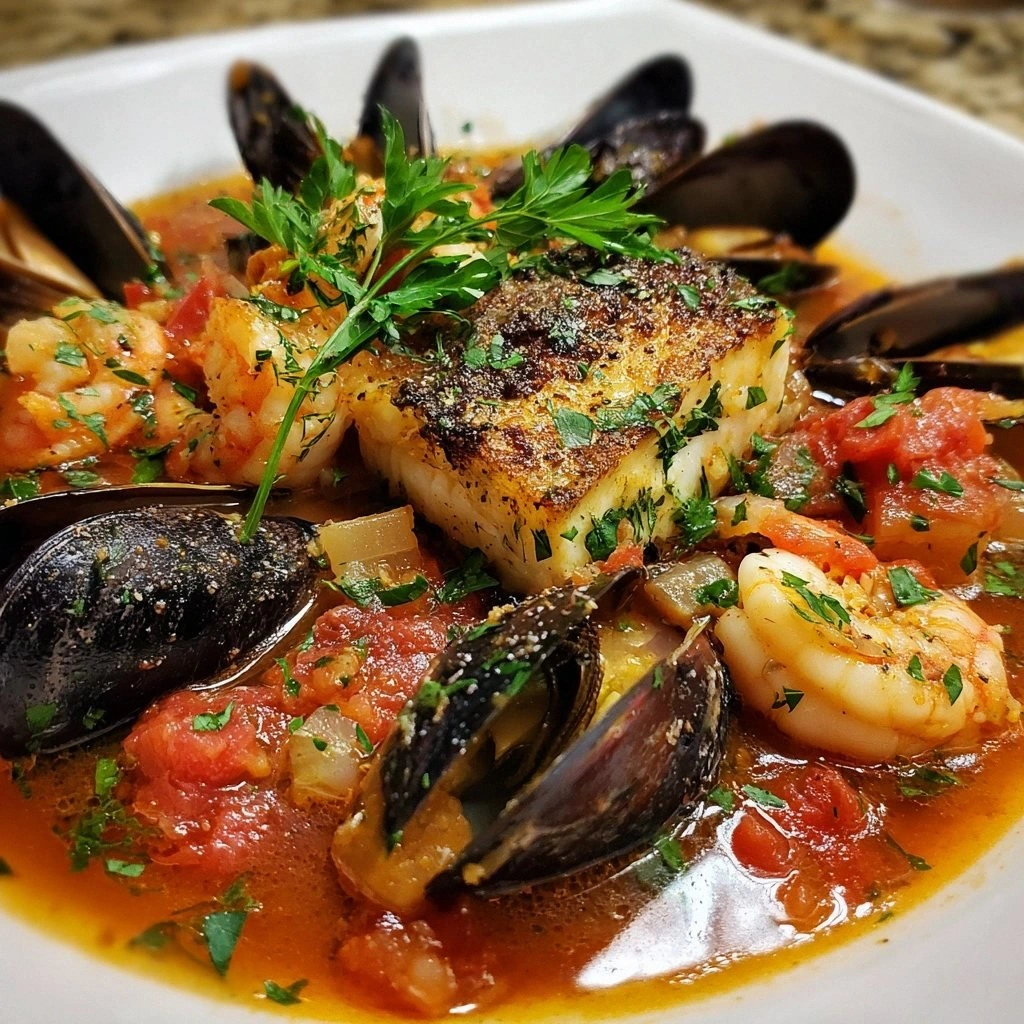
- Now it’s time for the seafood. Add the sea bass and monkfish chunks first, letting them cook for about six minutes until they begin to flake. The fish should be cooked through but still tender. Next, add the shrimp, mussels, and clams, and stir gently. The mussels and clams will open as they cook, releasing a briny aroma that enhances the broth. After another four minutes, all the seafood should be perfectly cooked, tender, and infused with the broth’s flavors.
- Remove the bay leaf, then stir in half a cup of chopped parsley and a squeeze of fresh lemon juice. The parsley adds a fresh, green note, and the lemon brightens the broth, cutting through the richness. Taste the broth and adjust seasoning with salt and pepper as needed. This final touch ensures the stew is balanced and vibrant. Let the stew rest for a couple of minutes before serving.
- Serve the Bouillabaisse hot, ladling the broth into bowls and spooning the fish and shellfish on top. Garnish with a few extra parsley leaves and a drizzle of high‑quality olive oil. Pair it with crusty bread or a side of saffron risotto for a complete meal. The broth should be silky, aromatic, and packed with layers of flavor. Enjoy the symphony of the sea in every spoonful.
That’s it— you did it. But hold on, I’ve got a few more tricks that will take this to another level.
Insider Tricks for Flawless Results
The Temperature Rule Nobody Follows
Many people think a high simmer is the key to a good stew, but that actually leaches out delicate flavors from the seafood. Instead, keep the heat low and let the broth gently bubble for fifteen minutes. This preserves the natural sweetness of the fish and ensures the shellfish release their juices without becoming rubbery. I once tried a high simmer and ended up with a broth that tasted like burnt fish; this trick saved the day.
Why Your Nose Knows Best
Your nose is a better judge of doneness than your eyes. When the broth smells bright, citrusy, and slightly smoky, you’re close to perfection. If it starts to smell overly fishy or sour, pull the pot off the heat immediately. Trust your nose— it will guide you to the exact moment the flavors are fully developed.
The 5-Minute Rest That Changes Everything
After the seafood has cooked, let the stew sit covered for five minutes before serving. This resting period allows the flavors to meld and the shellfish to finish cooking gently. It also gives the broth a chance to thicken slightly, creating a silkier mouthfeel. Skipping this step can leave the stew feeling watery.
Use Fresh, Local Fish for Authenticity
The difference between a good Bouillabaisse and a great one is the freshness of the seafood. Local fish caught the same day will have a cleaner, brighter flavor that the broth amplifies. If you’re traveling, choose the freshest options available, and avoid pre‑cooked or canned seafood.
Simmer with a Lid Half‑Off
Keeping the pot half covered during the simmer allows steam to escape while preventing the broth from evaporating too quickly. This technique keeps the liquid at a steady temperature, ensuring even cooking of the fish and shellfish. It also helps maintain the broth’s consistency, preventing it from becoming too thin.
Finish with a Touch of Cream for Richness (Optional)
If you’re feeling indulgent, swirl in a tablespoon of heavy cream just before serving. The cream adds a velvety texture and balances the acidity of the lemon. I’ve used this trick on special occasions, and it elevates the stew into a luxurious, restaurant‑style dish.
Creative Twists and Variations
This recipe is a playground. Here are some of my favorite ways to switch things up:
Smoky Chipotle Bouillabaisse
Swap the cayenne pepper for a teaspoon of chipotle powder and add a pinch of smoked paprika. The smoky undertone pairs wonderfully with the briny seafood and gives the broth a depth reminiscent of a campfire. This version is perfect for those who love a little heat and a lot of flavor.
Herb‑Infused Mediterranean Bouillabaisse
Add a handful of fresh basil and oregano to the broth, and replace the lemon juice with a splash of white wine vinegar. The herbal notes give the stew a bright, aromatic profile that complements the seafood. This twist is ideal for a sunny, Mediterranean‑themed dinner.
Spicy Coconut Bouillabaisse
Replace half the fish stock with coconut milk and add a pinch of ground ginger. The coconut adds a subtle sweetness that balances the sea flavor, while the ginger brings a warm, spicy kick. This version works well for a tropical, exotic dinner.
Low‑Calorie Bouillabaisse
Use vegetable stock instead of fish stock, reduce the olive oil to one tablespoon, and increase the amount of fresh herbs. This keeps the dish light yet flavorful, making it a great option for a health‑conscious meal. The broth still retains its depth thanks to the saffron and aromatics.
Seafood Bouillabaisse with Prawns Only
If you prefer a simpler version, use only shrimp and mussels, and skip the monkfish and sea bass. The result is a lighter, more focused dish that still delivers a burst of oceanic flavor. It’s perfect for a quick weeknight dinner.
Vegetarian Bouillabaisse
Omit all seafood and add a mix of diced zucchini, bell pepper, and eggplant. Use vegetable stock and add a teaspoon of smoked paprika for depth. This version maintains the aromatic base while offering a hearty, plant‑based alternative.
Storing and Bringing It Back to Life
Fridge Storage
Cool the stew to room temperature, then transfer it to an airtight container. Store in the refrigerator for up to 3 days. The broth will thicken slightly as it cools, so reheat gently to restore its original consistency. This method preserves the freshness of the seafood and the delicate flavors.
Freezer Friendly
For longer storage, place the stew in a freezer‑safe container and freeze for up to 2 months. When ready to enjoy, thaw overnight in the refrigerator. This ensures the seafood remains tender and the broth doesn’t separate during freezing.
Best Reheating Method
Reheat the stew on low heat, adding a splash of water or broth if it looks dry. Stir occasionally to prevent scorching. A small amount of water helps steam the broth back to its silky texture. Avoid boiling, as that can cause the shellfish to become rubbery.
With these storage tips, you can enjoy the same mouth‑watering Bouillabaisse anytime, whether it’s a week‑later dinner or a cozy weekend brunch.