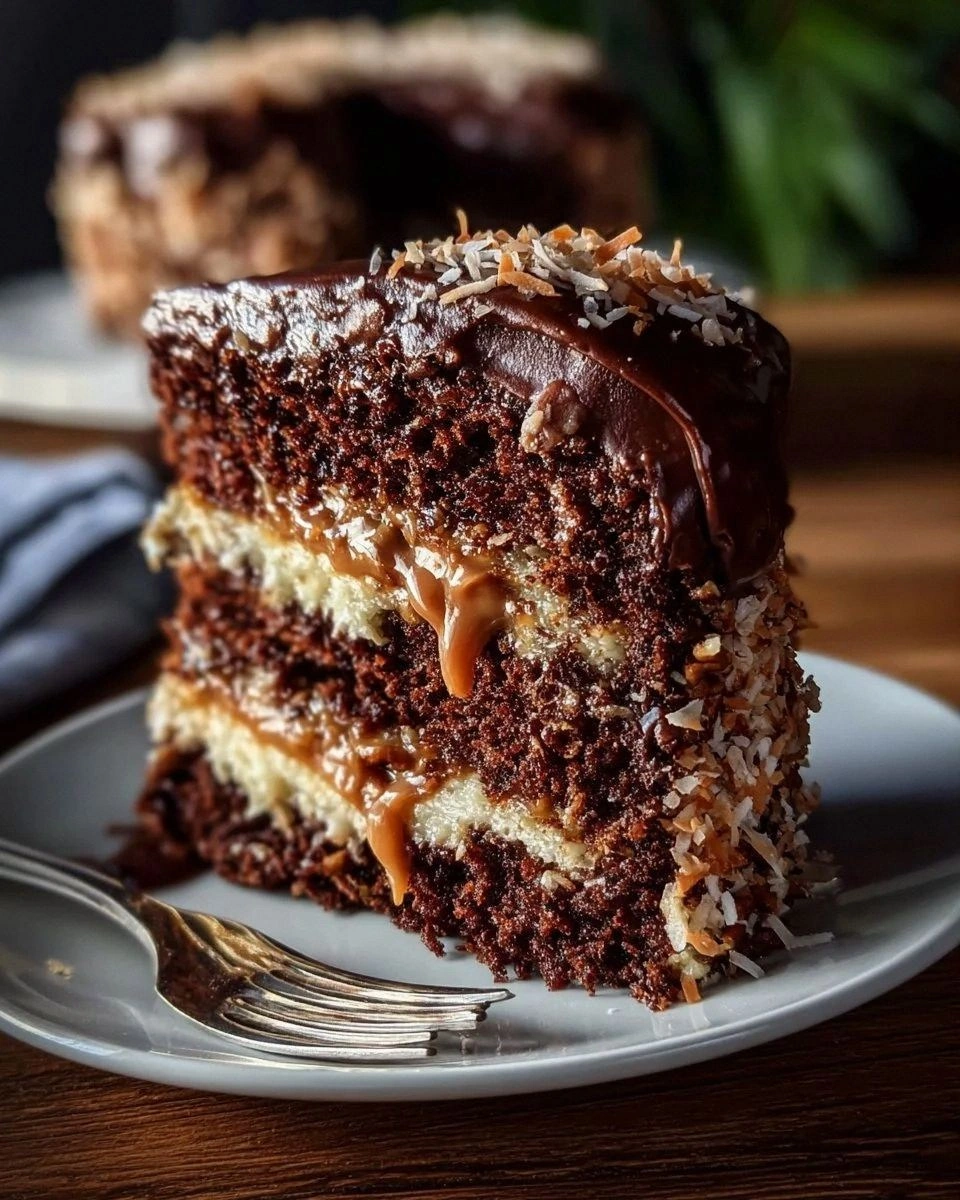
Picture this: it’s a rainy Saturday afternoon, the kind where the clouds look like a giant, fluffy cake batter waiting to be whisked into something spectacular. I was half‑heartedly scrolling through endless dessert videos when a friend dared me to create a chocolate cake that could double as a dessert centerpiece and a comfort‑food hug. I thought, “Why not?” and the kitchen turned into a battlefield of cocoa dust, coconut shavings, and pecan shells clacking like tiny cymbals. The air filled with the deep, earthy perfume of chocolate mingling with the sweet, tropical whisper of coconut, while the oven’s low hum became the soundtrack to my culinary experiment.
As the batter hit the mixing bowl, I could already hear the faint crackle of the pecans promising a crunchy surprise, and the coconut whispered, “I’m here to make this richer than a tropical vacation.” The first bite of the finished cake would be a symphony of textures: the silky, fudgy chocolate base, the tender chew of coconut, and the buttery snap of toasted pecans that would echo in your mouth like applause after a standing‑ovation performance. I’ll be honest — I ate half the batch before anyone else got a chance to try it, and that’s how I know this cake is pure, unadulterated bliss.
Most chocolate cake recipes get the balance of richness and moisture wrong, ending up either dry as a desert or so oily they slide off the plate. This version, however, uses a clever combination of oil and milk that keeps the crumb moist while allowing the cocoa to shine like a midnight sky. The secret weapon? A generous cup of shredded coconut that adds a subtle, nutty sweetness, and a cup of chopped pecans that give each forkful a satisfying crunch. I dare you to taste this and not go back for seconds; the flavor profile is so layered that your palate will keep discovering new notes with every bite.
Okay, ready for the game‑changer? The technique that elevates this cake from ordinary to unforgettable is the “double‑whisk” method: first whisk the dry ingredients together to aerate them, then whisk the wet ingredients separately before gently folding everything together. This prevents over‑mixing, which can make cakes tough, and ensures a light, airy crumb that still feels decadently dense. Let me walk you through every single step — by the end, you’ll wonder how you ever made it any other way.
What Makes This Version Stand Out
- Flavor Explosion: The marriage of deep cocoa, sweet coconut, and buttery pecans creates a taste that feels both familiar and exotic, like a tropical vacation in a chocolate bar.
- Texture Symphony: Moist, fudgy crumb meets crunchy nutty bits, delivering a mouthfeel that’s simultaneously silky and satisfyingly crisp.
- Simplicity Meets Sophistication: Only a handful of pantry staples are needed, yet the result feels like a bakery‑level masterpiece.
- Ingredient Quality: Using high‑quality unsweetened cocoa and fresh, toasted pecans makes a world of difference in depth of flavor.
- Crowd‑Pleaser Factor: Even the most skeptical eaters admit this cake is “the best chocolate cake they’ve ever had at home.”
- Make‑Ahead Magic: The cake stays moist for days, and the flavors actually improve after a night in the fridge.
- Versatile Base: Serve it plain, dust it with powdered sugar, or slather on a quick ganache for an extra layer of indulgence.
- Season‑Proof: Whether it’s a summer barbecue or a winter holiday gathering, this cake fits the bill.
Inside the Ingredient List
The Flavor Base
Unsweetened cocoa powder (0.75 cups): This is the heart of the chocolate flavor, providing that deep, slightly bitter richness that balances the sweetness of the sugar. If you skip it, you’ll end up with a vanilla‑only cake that lacks the depth we’re after. For a more complex profile, try a blend of Dutch‑process and natural cocoa in equal parts.
Granulated sugar (1.5 cups): Sugar not only sweetens but also helps tenderize the crumb by inhibiting gluten formation. Too little and the cake will taste flat; too much and it becomes cloying. You can substitute half with coconut sugar for a hint of caramel.
The Texture Crew
All‑purpose flour (1.75 cups): Flour provides the structure, but because we’re using a high‑fat batter, we keep the amount modest to avoid a dense outcome. Sift it with the cocoa and leavening agents to incorporate air and prevent lumps.
Vegetable oil (1 cup): Oil is the secret to a moist, tender crumb that stays soft even after a day. Unlike butter, it won’t solidify when the cake cools, keeping each slice buttery smooth. If you’re dairy‑free, any neutral oil works just fine.
Milk (1 cup): The liquid hydrates the dry ingredients and creates steam during baking, giving the cake its lift. Non‑dairy milks like almond or oat work perfectly and add a subtle nuance.
The Unexpected Star
Shredded coconut (1 cup, unsweetened): Coconut adds a delicate chew and a tropical aroma that elevates the chocolate without overpowering it. If you prefer extra sweetness, lightly toast the coconut first; the caramelized notes will sing.
Pecans, chopped (1 cup): Pecans bring a buttery crunch that contrasts the soft cake, and their natural oils keep the crumb moist. Toast them for a few minutes to unlock deeper nutty flavors; just watch them closely, they burn fast.
The Final Flourish
Baking powder (1 tsp) & Baking soda (1 tsp): These leaveners work together; the soda reacts with the cocoa’s acidity, while the powder provides an extra lift. Skipping either will result in a dense, flat cake that feels more like a brownie than a cake.
Salt (0.5 tsp): A pinch of salt amplifies all the flavors, preventing the sweetness from becoming cloying. It’s the quiet hero that makes every bite sing.
Vanilla extract (2 tsp): Vanilla adds a warm, aromatic backdrop that ties the chocolate, coconut, and pecan flavors together. Use pure extract for the best result; imitation can taste harsh.
Eggs (2 large): Eggs act as emulsifiers, binding the oil and liquid together while adding lift. Over‑beating can incorporate too much air, leading to a cake that collapses; gentle whisking is key.
Everything's prepped? Good. Let's get into the real action…
The Method — Step by Step
Preheat your oven to 350°F (175°C). While the oven warms, grease a 9‑inch round cake pan with a thin layer of oil and line the bottom with parchment paper. This ensures the cake releases cleanly, preventing that dreaded “stuck‑to‑the‑pan” drama that can ruin a perfect bake. The kitchen will start to smell faintly of butter as the pan warms, a subtle promise of what’s to come.
In a large bowl, whisk together the flour, cocoa powder, baking powder, baking soda, and salt until fully combined. This dry blend should look like a uniform, dark dust with no streaks of flour—think of it as a chocolate snowstorm. Power transition: Okay, ready for the game‑changer? This dry whisk is the first step to a light, airy crumb.
In a separate bowl, combine the sugar, oil, and eggs. Whisk vigorously for about a minute until the mixture becomes glossy and slightly thickened. This is the moment of truth—if the mixture looks too thin, add a splash of milk; if too thick, a drizzle of oil will smooth it out. Then stir in the vanilla extract, letting its fragrant aroma fill the kitchen.
Gradually add the dry mixture to the wet, alternating with the milk. Start with a third of the dry, then half the milk, and continue this rhythm, ending with the dry ingredients. The batter should be smooth, glossy, and just a touch thick—like a luxurious chocolate mousse. Watch the texture: It should coat the back of a spoon without dripping off too quickly.
Fold in the shredded coconut and chopped pecans using a spatula. This is where the magic happens—the coconut adds a subtle chew, while the pecans provide that buttery crunch that will surprise every bite. Make sure the nuts are evenly distributed; you don’t want a pocket of coconut at one edge and none at the other.
Pour the batter into the prepared pan, smoothing the top with a spatula. The batter should spread evenly, forming a gentle dome that will rise into a perfect, rounded cake. Slide the pan onto the middle rack of the oven and bake for 30‑35 minutes, or until a toothpick inserted into the center comes out with a few moist crumbs but no wet batter. The edges will start pulling away from the pan, a visual cue that the cake is done.
Allow the cake to cool in the pan for 10 minutes, then run a thin knife around the edge to loosen it and invert onto a wire rack. As the cake cools, the coconut will soften slightly, and the pecans will retain their crunch. Resist the urge to frost immediately; a warm cake can melt any glaze you might add. Instead, let it reach room temperature, then dust with powdered sugar or drizzle with a simple chocolate ganache for that final wow factor.
That's it — you did it. But hold on, I've got a few more tricks that'll take this to another level...
Insider Tricks for Flawless Results
The Temperature Rule Nobody Follows
Never bake a cake straight from a cold refrigerator. Let the batter sit at room temperature for 15 minutes before it goes in the oven. This small step ensures the batter bakes evenly, preventing a dome that’s over‑cooked on top and under‑cooked in the middle. I once tried skipping this and ended up with a “pancake‑like” top that was too soft. Trust me, this rule is a game‑changer.
Why Your Nose Knows Best
The moment you open the oven and a wave of chocolate‑coconut aroma hits you, you’re at the perfect checkpoint. If the scent is faint, the cake likely needs a few more minutes; if it’s overpowering, start checking for doneness now. Trusting your senses can prevent over‑baking, which dries out the crumb.
The 5‑Minute Rest That Changes Everything
After the cake cools on the rack, let it rest for an additional five minutes before slicing. This short pause lets the steam settle, preventing the cake from crumbling. The crumb firms up just enough to hold together, giving each slice a clean edge.
Toast the Nuts, Not Just the Coconut
Toasting pecans releases their natural oils, intensifying the buttery flavor. A quick toast in a dry skillet over medium heat for 3‑4 minutes, shaking frequently, yields a golden‑brown hue and a nutty aroma that pairs perfectly with the chocolate base.
Use a Light Hand When Folding
When incorporating the coconut and pecans, use a gentle folding motion rather than vigorous stirring. Over‑mixing at this stage can deflate the batter, leading to a flat cake. Think of it as coaxing the ingredients together, not forcing them.
Creative Twists and Variations
This recipe is a playground. Here are some of my favorite ways to switch things up:
Double‑Chocolate Delight
Swap half of the cocoa powder for melted dark chocolate, and add chocolate chips to the batter. The result is an ultra‑rich, fudgy cake that satisfies the most intense chocolate cravings.
Coconut‑Lime Breeze
Replace half of the milk with coconut milk and add zest of one lime to the batter. The citrus lifts the tropical notes, creating a bright, summery flavor profile that pairs well with whipped cream.
Pecan‑Maple Swirl
Stir in a tablespoon of pure maple syrup and a drizzle of caramel sauce before baking. The maple adds depth, while the caramel creates a glossy swirl that looks as good as it tastes.
Spiced Holiday Version
Introduce a pinch of cinnamon, nutmeg, and a dash of espresso powder to the dry mix. These warm spices turn the cake into a cozy holiday treat, perfect for festive gatherings.
Vegan Adaptation
Replace the eggs with a “flax egg” (1 tbsp ground flaxseed + 3 tbsp water per egg) and use a plant‑based oil like coconut oil. The coconut flavor intensifies, and the cake remains just as moist.
Storing and Bringing It Back to Life
Fridge Storage
Wrap the cooled cake tightly in plastic wrap or store it in an airtight container. It will stay fresh for up to five days, and the flavors will meld, becoming even more harmonious. If you’ve added a glaze, keep it separate to avoid sogginess.
Freezer Friendly
Slice the cake into serving pieces, wrap each slice in parchment paper, then place them in a freezer‑safe bag. They’ll keep for up to three months. To thaw, move the slice to the fridge overnight, then let it sit at room temperature for 20 minutes before serving.
Best Reheating Method
When you’re ready to enjoy a slice, preheat your oven to 300°F (150°C), place the slice on a baking sheet, and heat for 8‑10 minutes. Add a tiny splash of water to the bottom of the pan; the steam will revive the crumb, making it taste freshly baked.